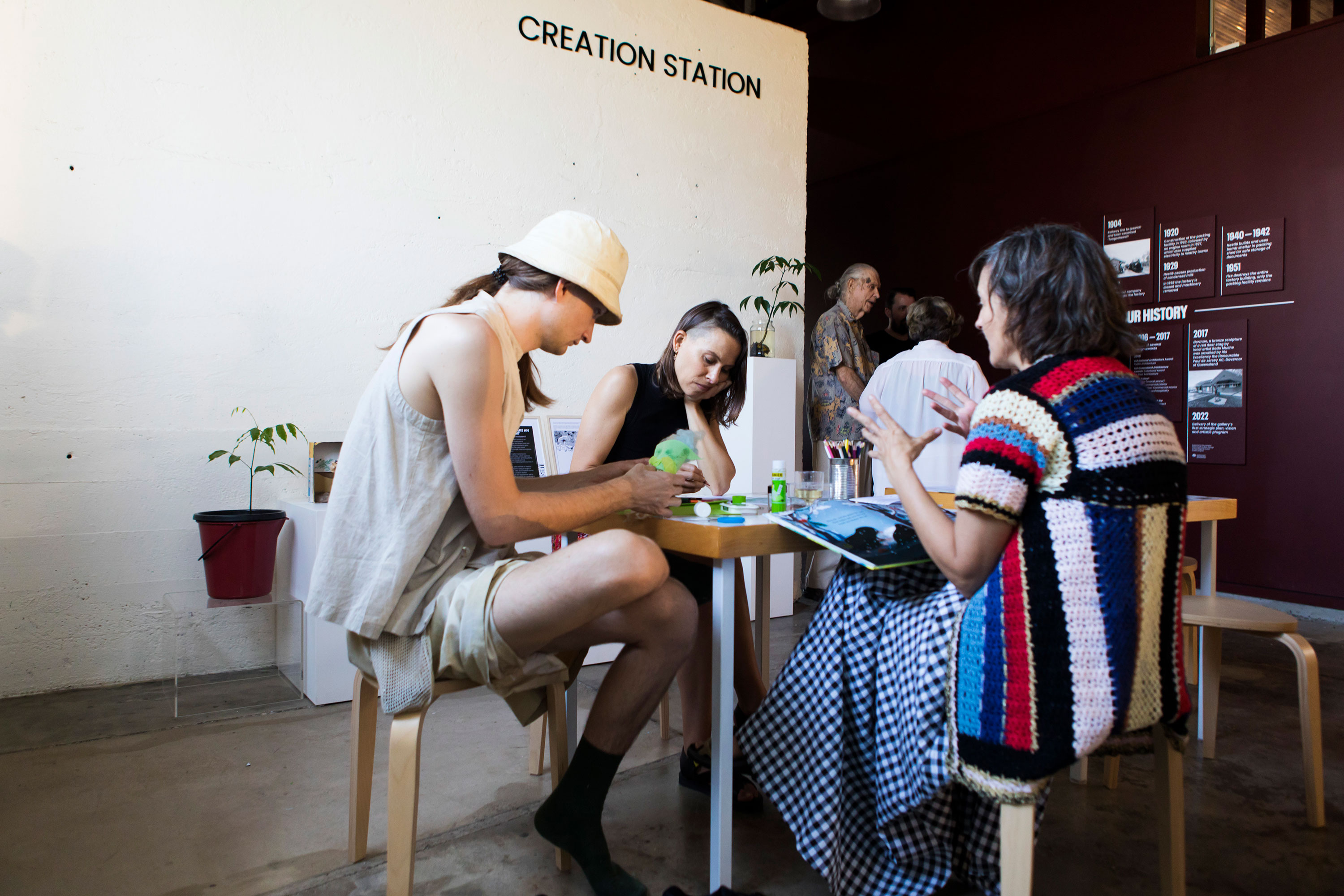
Over the course of a year in residence, I visited the unceded lands of Dungibara, Jinibara, Jagera, Yuggera and Ugarupul people (the Somerset region) many times to research and develop the body of work presented in an exhibition 'Natural State' at The Condensery (November 2022 - February 2023). I spent time meeting and speaking with individuals, working with community groups, observing and asking questions and delved into some key themes that emerged - the shifting nature of country, history and narrative, and the interconnectedness of multi-species relationships, intricately intertwined with human lives.
The works presented in the exhibition, including video, sound, sculpture, installation and participatory programs were in conversation with each other, including a new work by First Nations artists Libby Harward and Dominique Chen – practitioners that are living and making on Jinibara Country. Rust, microbes, water, soil and petrified wood were incorporated into the exhibition as a way to address multiple viewpoints and collectively think through culture, diversity, change and what it means to belong to Place
The following texts are taken from the exhibition floorplan, written by curator Rachel Arnt.
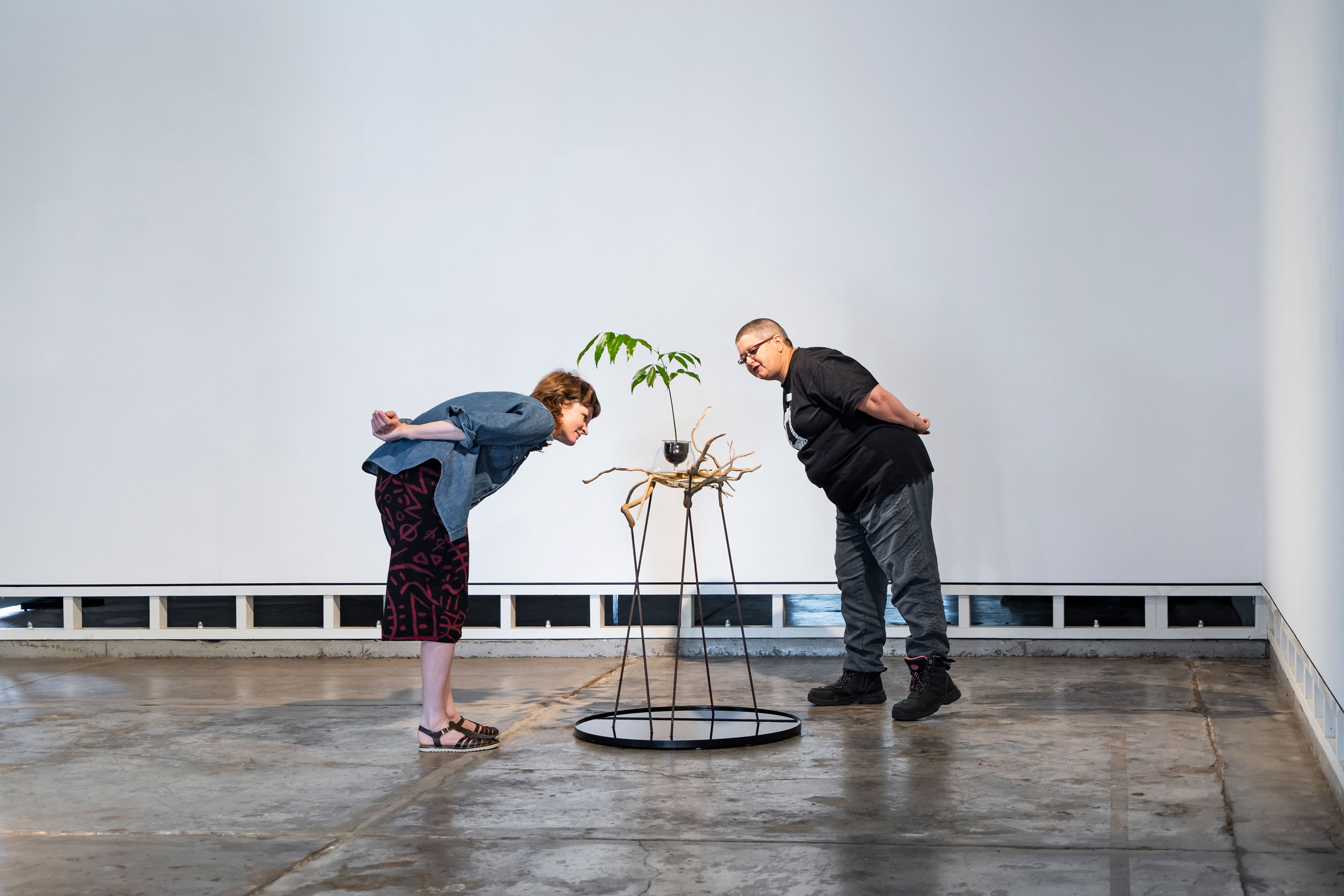
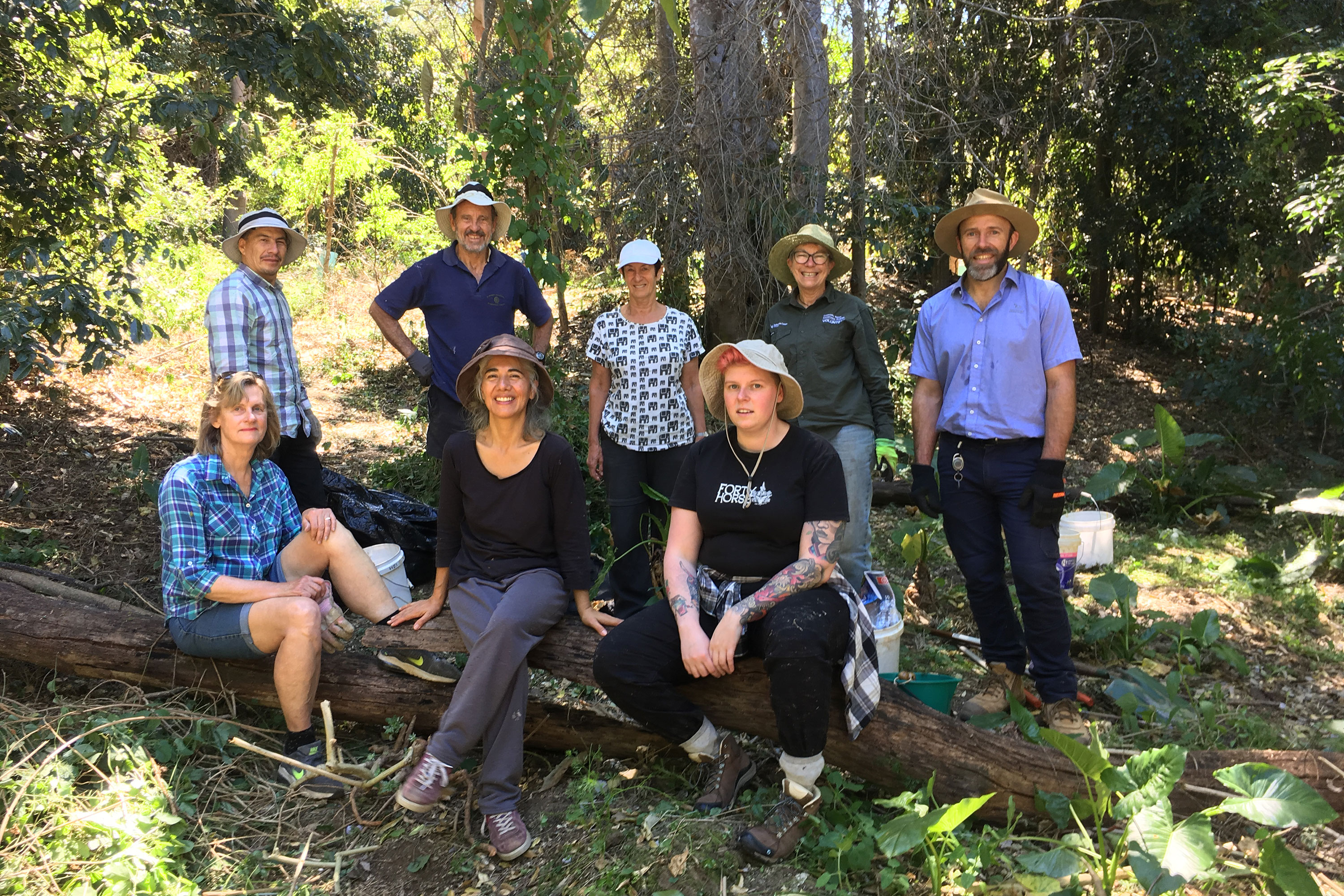
In her visits to the Somerset region, Caitlin Franzmann connected with the Friends of the Forest group, who are working to protect and restore the Greenhide Creek Reserve, a significant area of remnant lowland rainforest between Moore and Linville. Franzmann began conversations with organiser Carolita Fuentes (whose name translates to Song Fountains) and joined her in forest care working bees at Greenhide and in planting a food forest in the grounds of Linville State School, where Carolita also volunteers.
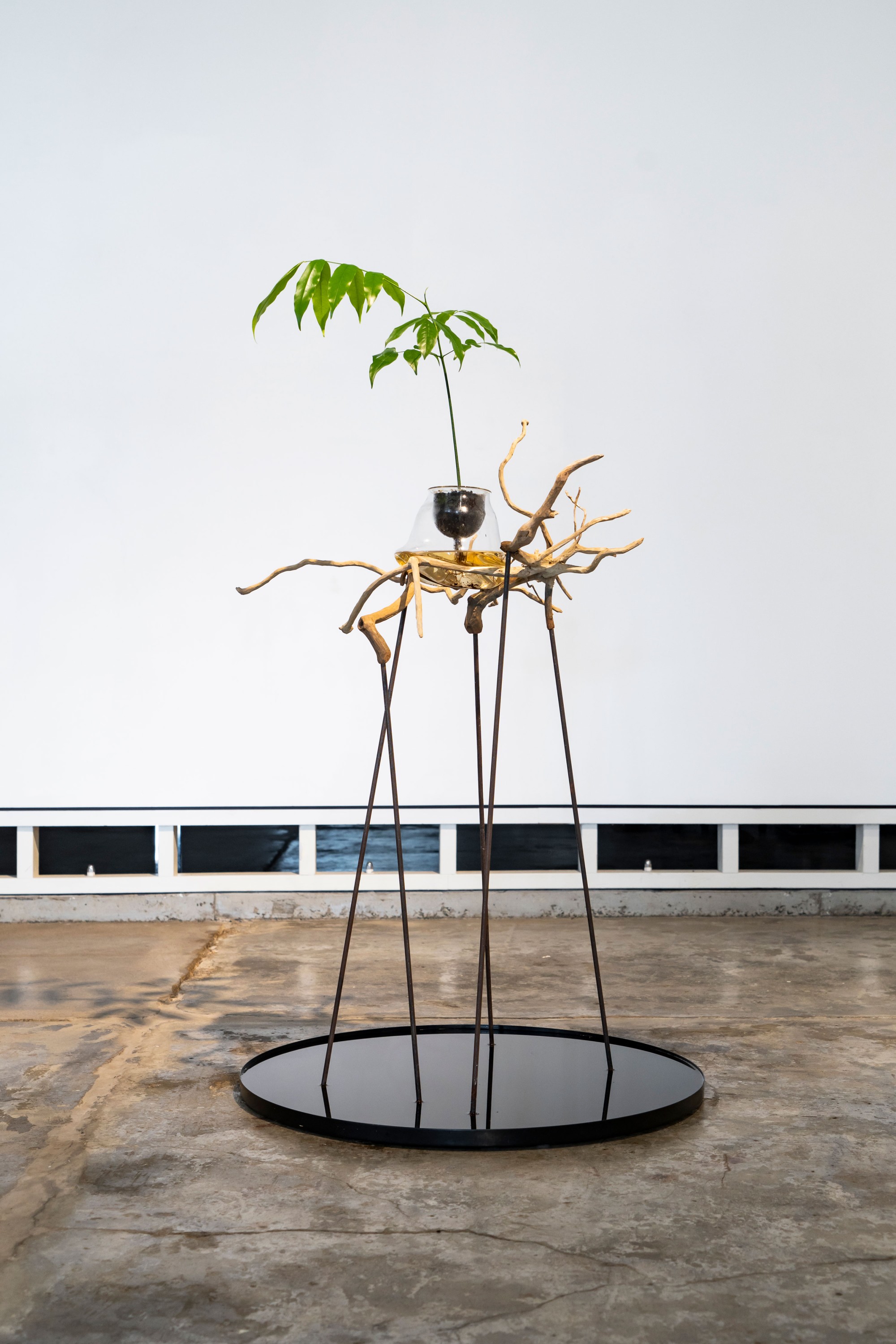
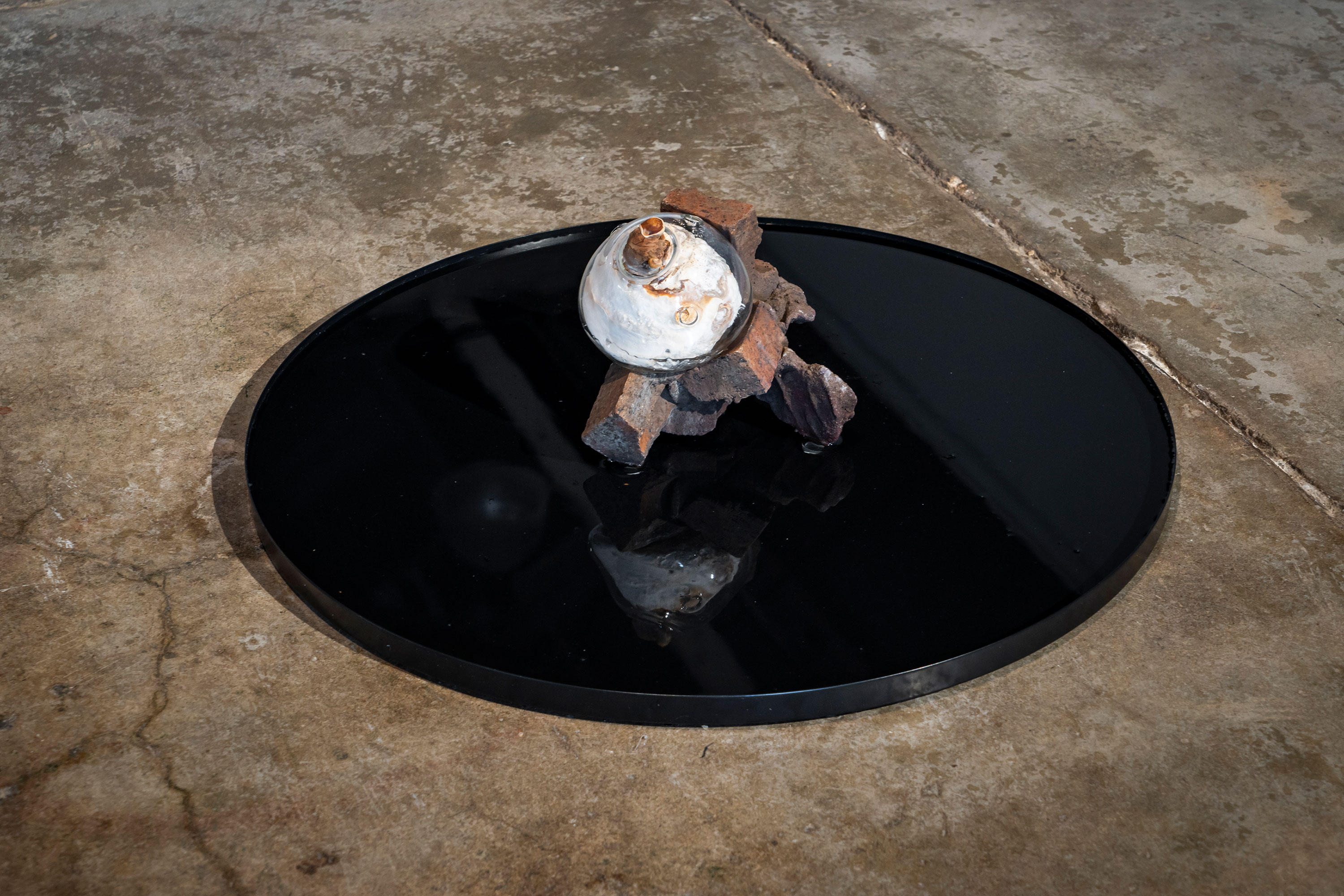
song fountains is a homage to Carolita, the Friends of the Forest group and this little pocket of forest where people listen to, and work with, the plants, mycelium, soil and microbes to best understand and support the biodiversity of its ecosystems. The sculpture comprises a lantana root pulled from Greenhide Creek Reserve, whittled and dyed in parts with rust from discarded industrial waste objects found in Cressbrook Creek, adjacent to The Condensery, the site of the former Nestlé condensed milk factory. A slumped glass vessel holds a seedling of a black bean tree collected from the Greenhide Creek Reserve, a symbol of regrowth and cultural continuity.
The lantana root is propped up by rusting steel rod legs that sit in a circular black pan filled with water. The water has a reflective quality, encapsulating the gallery space like a mirror when still and rippling responsiveness to subtle air movements from the gallery’s air conditioning and the movement of people visiting. The circular water-filled plinth points to the uncertainty and constancy of change yet calls for trust and reflection in our, the viewer’s, embedded position within Earth’s ecosystems.
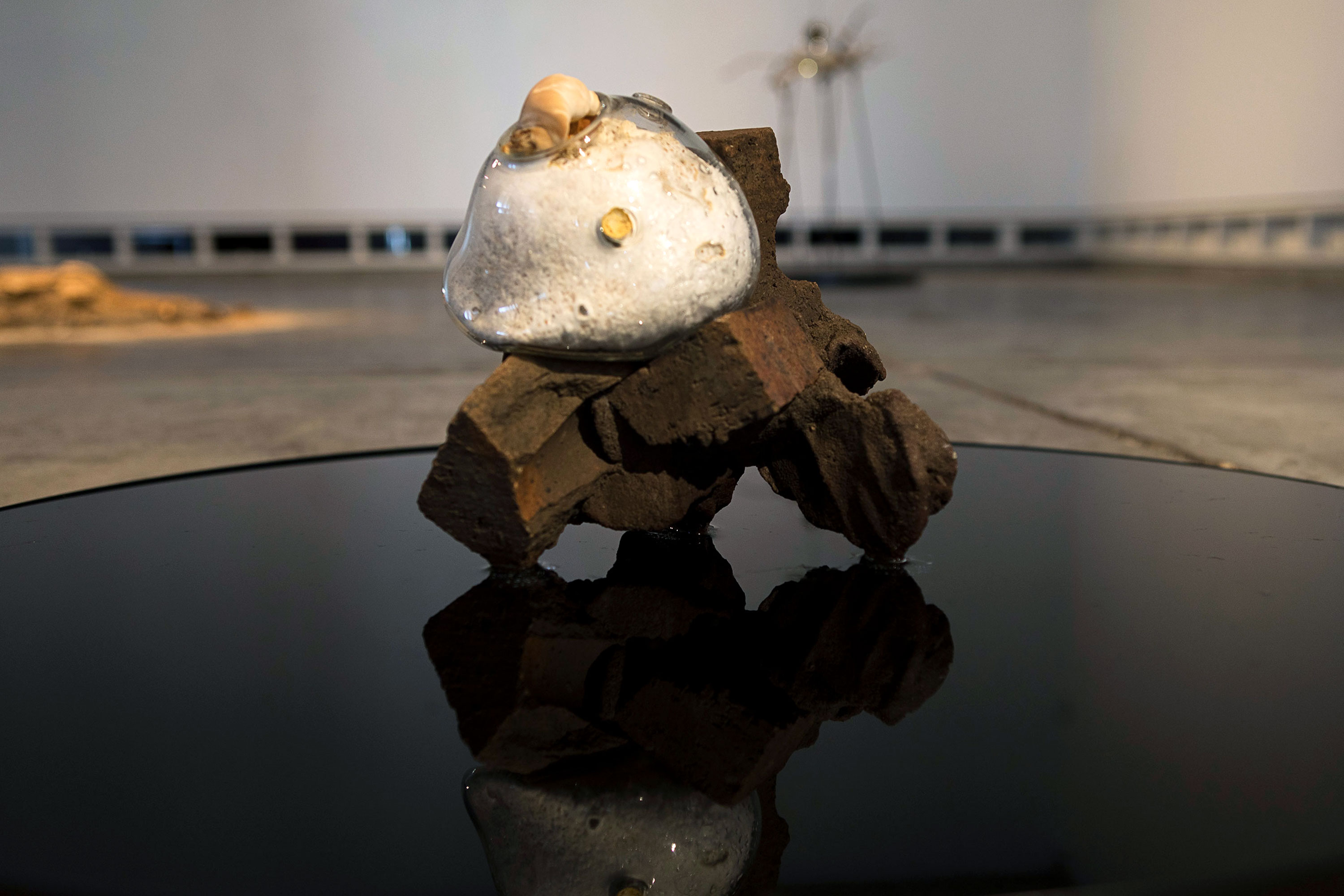
'back into' is a humble monument to Cressbrook Creek, that runs from Mount Dongineeriaman to the Brisbane River and to the organisations and community working on regenerating the creek and gully where it flows alongside The Condensery. The sculpture also speaks to the transformation of The Condensery as a site of industrial production (which the town of Toogoolawah was built around); of protection (storage of the Nestlé company documents in the bomb shelter during Second World War), of decline and decay (the main factory building was destroyed by fire in 1951); and to revival as a place for cultural/creative sharing.
Incorporating bricks and mortar from the former factory, wood rotting fungi grows from a glass vessel slumped over the building material. As one of the most ancient of species, fungi predate humans and trees. They enabled vegetation to take root and continue to unite diverse microbial communities. Fungi teaches us that survival isn’t about individuation but rather becoming radically involved, and ‘back into’- a returning or re-transformation.
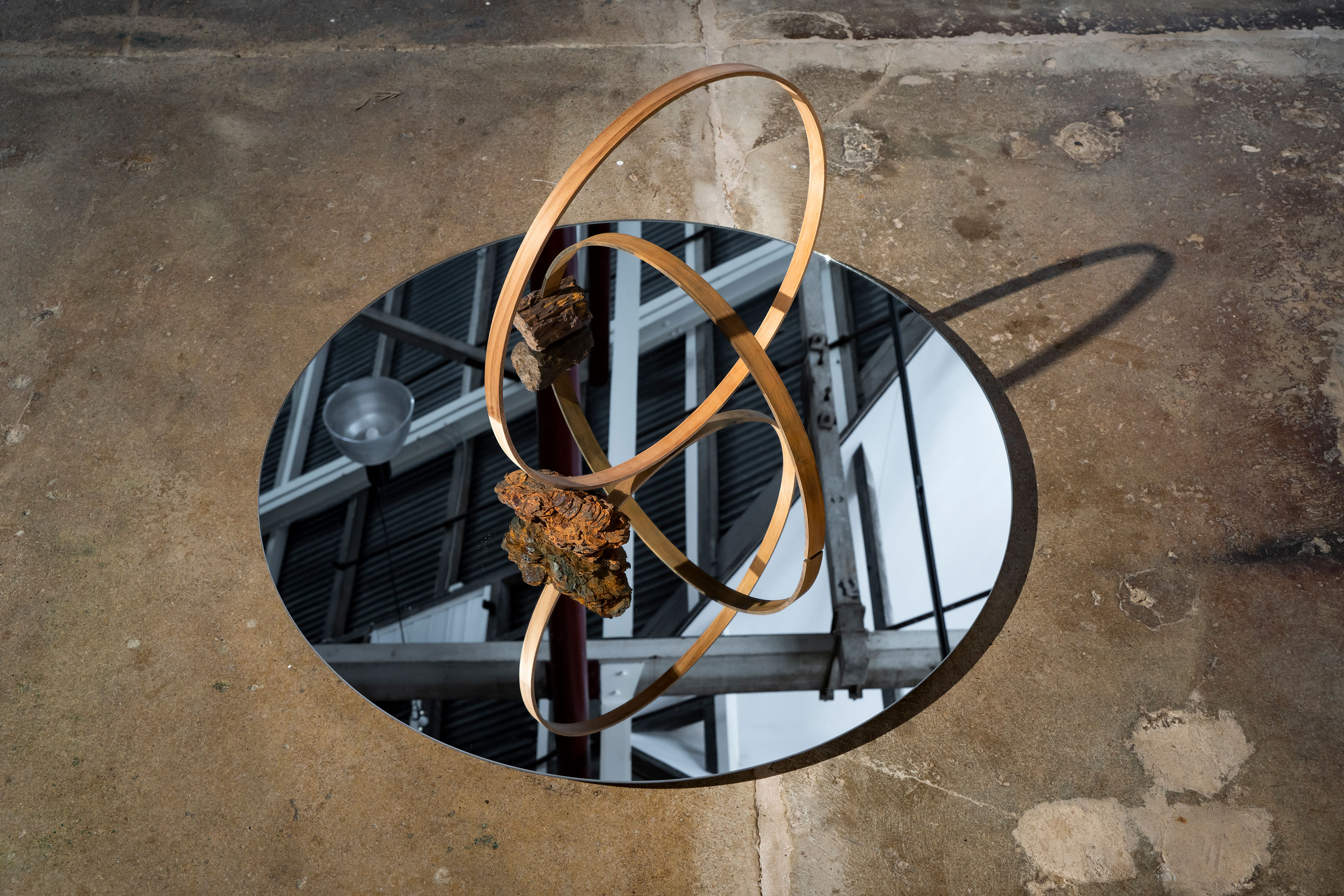
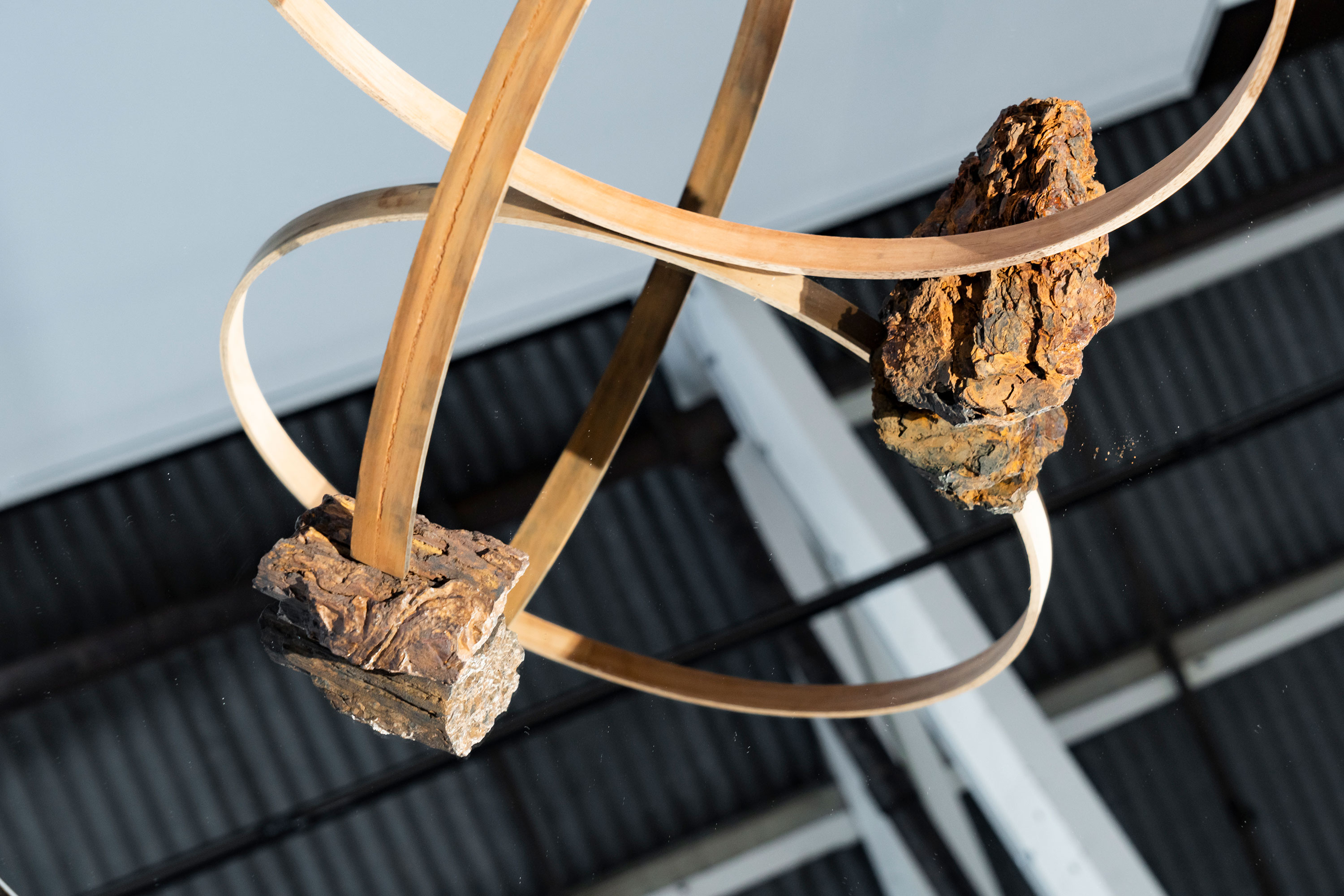
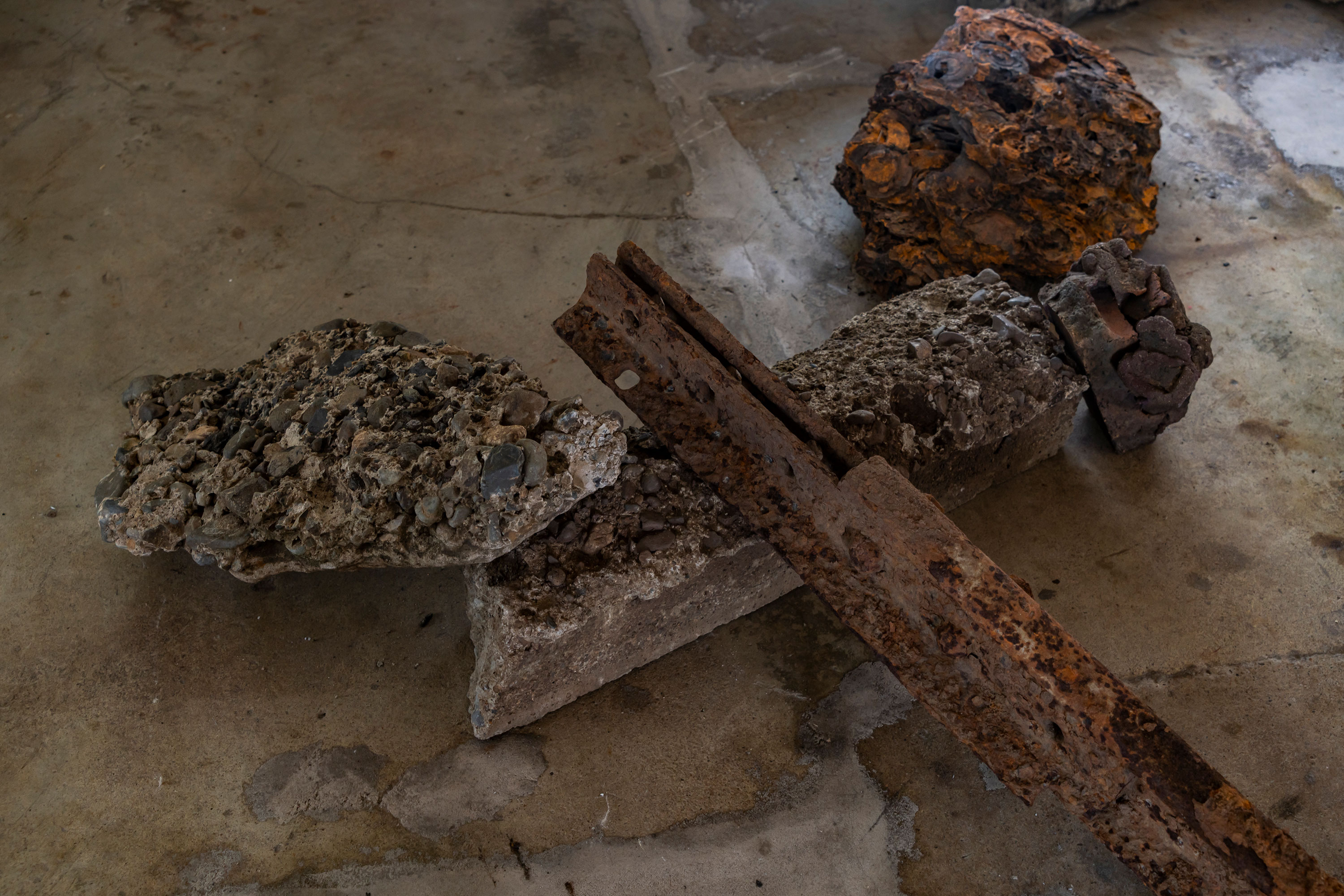
rust (a way) features a piece of petrified wood, found in a cabinet at The Condensery and a clump of metal (thought to be condensed milk tin) that has been thrown into the creek, compressed under the roots of a river she oak tree and rusted. In her research, Caitlin Franzmann had the piece of wood identified by an expert and found it to be an ancient relative of the Araucaria species, most likely millions of years old, from the local region and predominantly comprised of iron oxide. Similar in appearance due to their iron oxide content, these two objects reveal stories that span vastly different timescales.
Iron, oxygen and water, the main compounds of rust, are widespread in nature and play important roles in many geological and biological processes, including the processes that keep plants, fungi and animals and humans alive. The circular intersecting forms and reflective qualities of rust (a way) invite contemplation of these molecular processes that have always, and continue to, transform life on Earth.
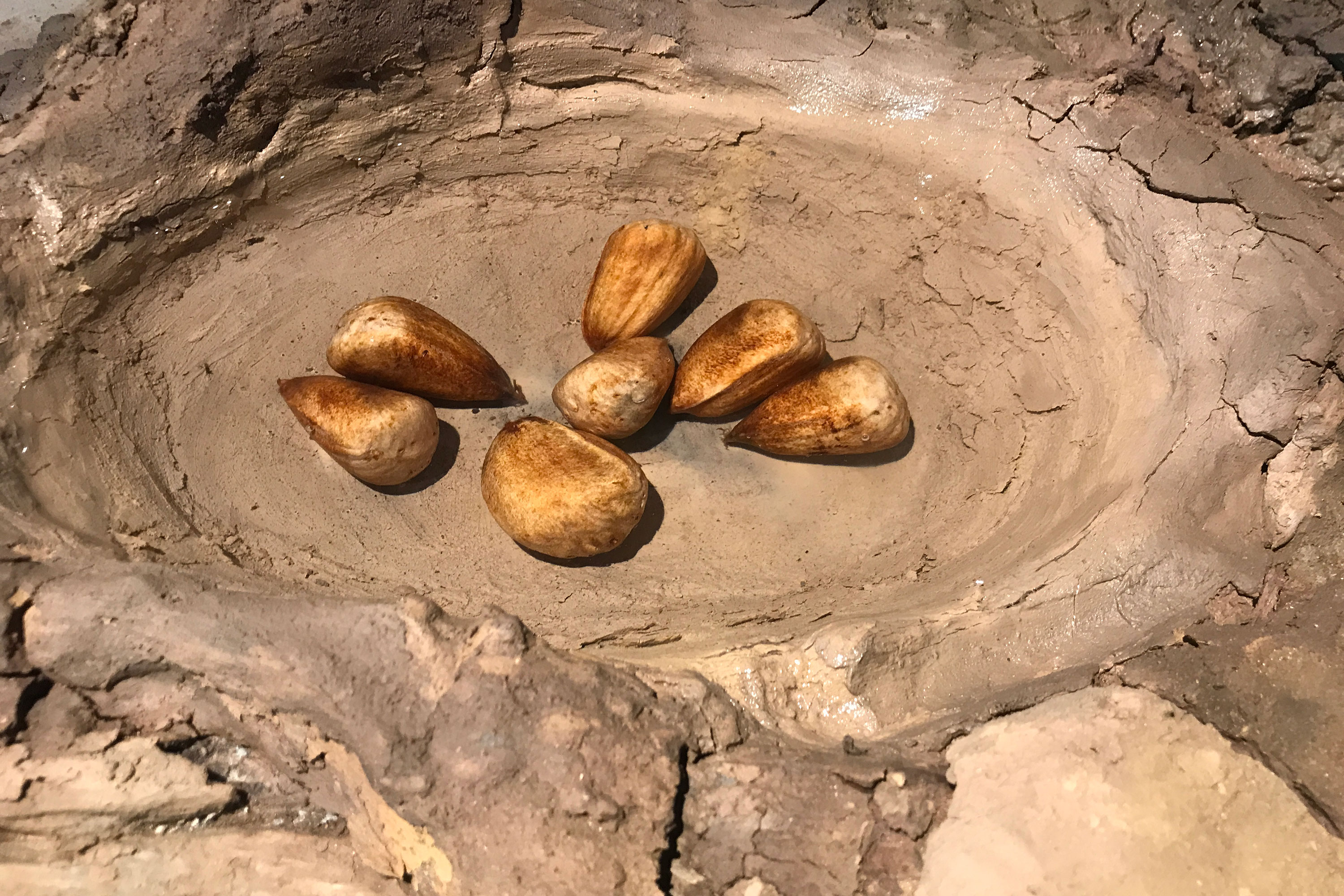
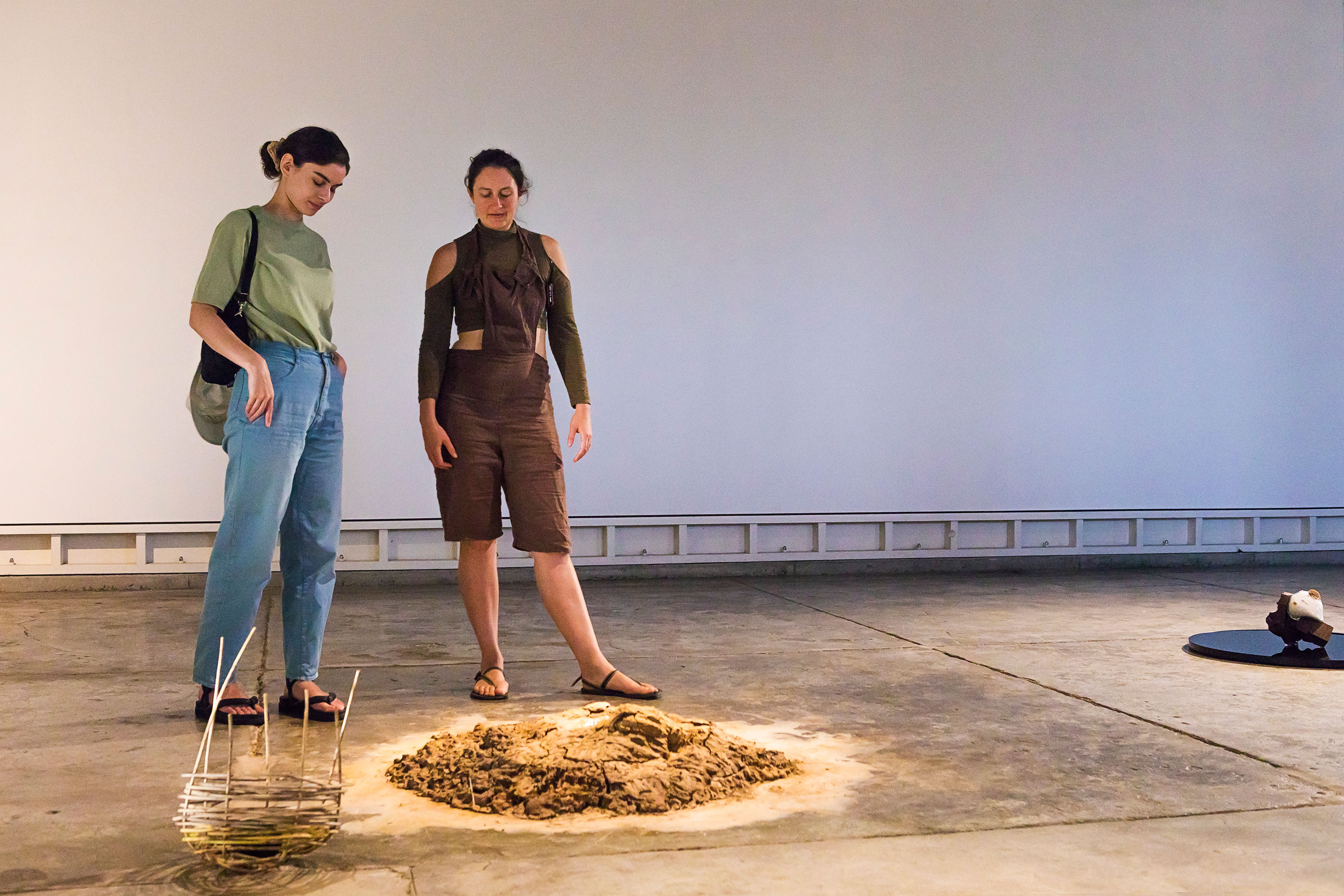
Through ice-ages, the rise and fall of megafauna, and the relatively recent moments of foreign arrivals …. we have been here, present, alive and coevolving with Country. Shaping and being shaped.
We share kinship with and within bloodlines and lifelines of the prehistoric bonyi, or bunya pine tree. Like our ancestors, here we are together on Yinibara Country to listen, share, connect and co-create through a deep understanding of our responsibility to our Living
Culture. Each of us, different but welcome. Respectful and reciprocal. Always accountable. Never contained, walking and being in our own sovereign spaces. Fermenting is (like) culture, always regenerating, always relational. Like yinnar/djalan/black woman on dhawun/djara/djawan/Country, it is listening and co-creating, in the most intimate of collaborations.
The presence of those within proximity, makes agitation, relation and co-creation inevitable. Breath, air, words, ideas, time, bacterias, histories, all influence and shape its boundaries and governance. Holding space, changing space. For many, in accordance with the Lore of Country. Collaborating … never overtaking, always remembering.
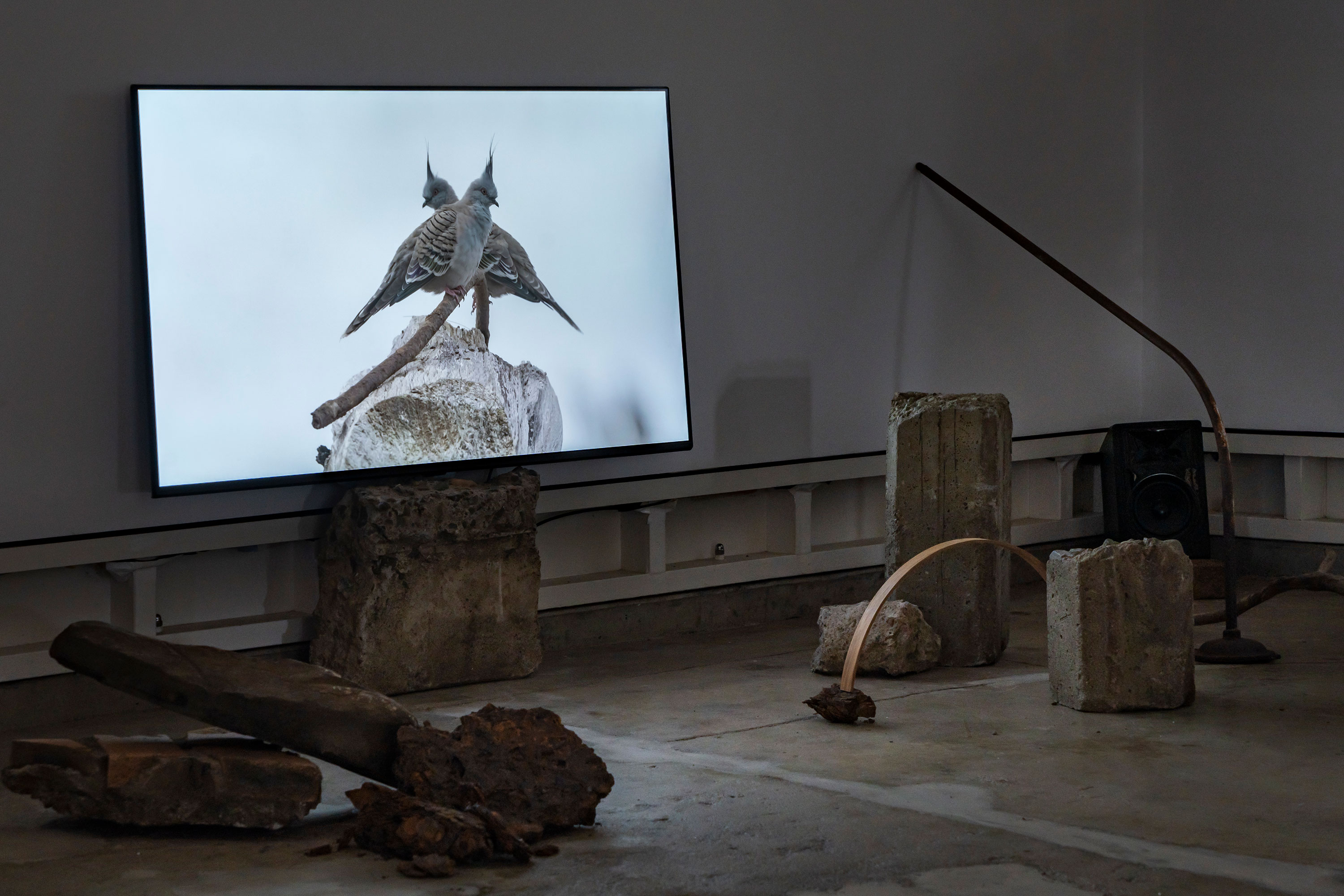
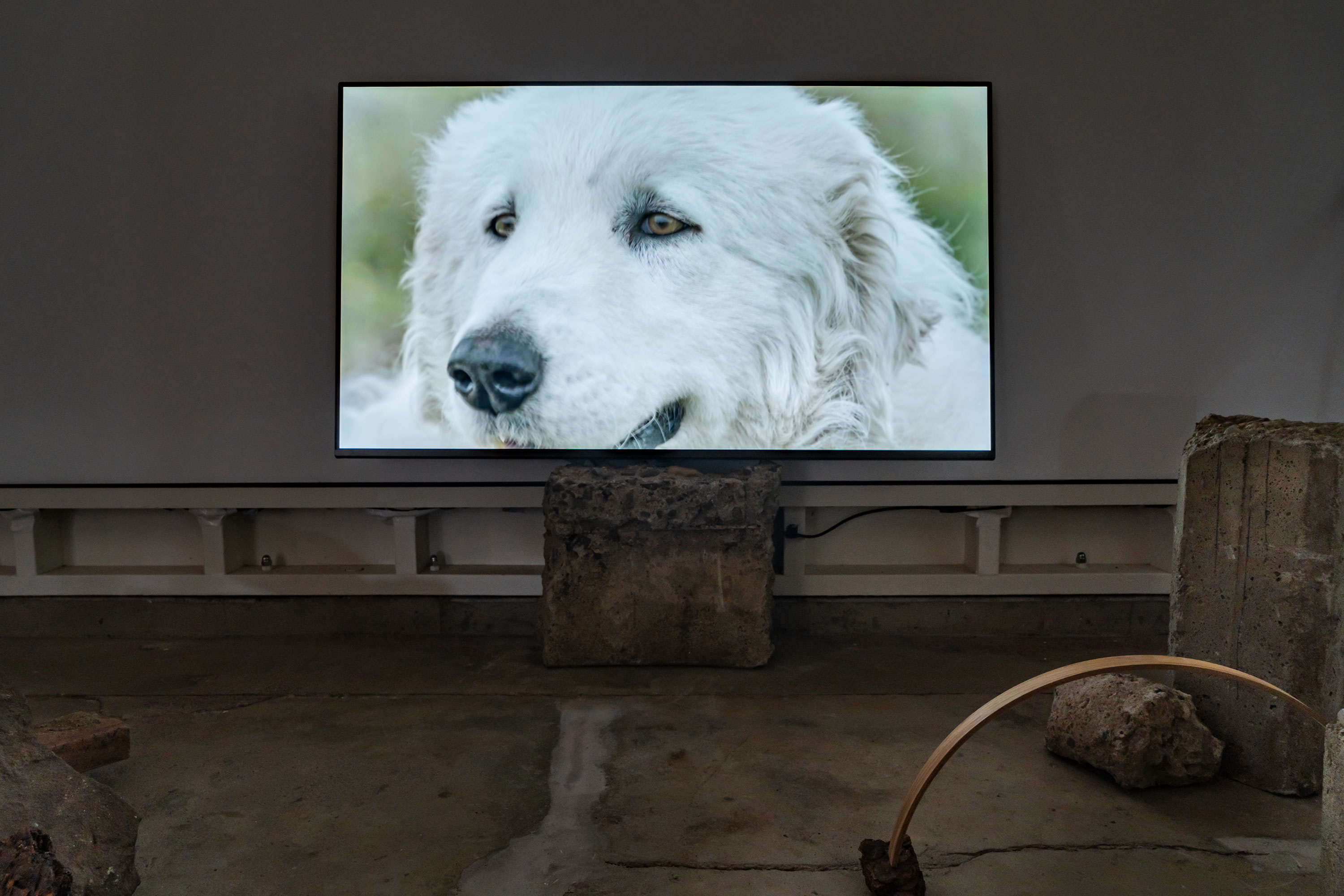
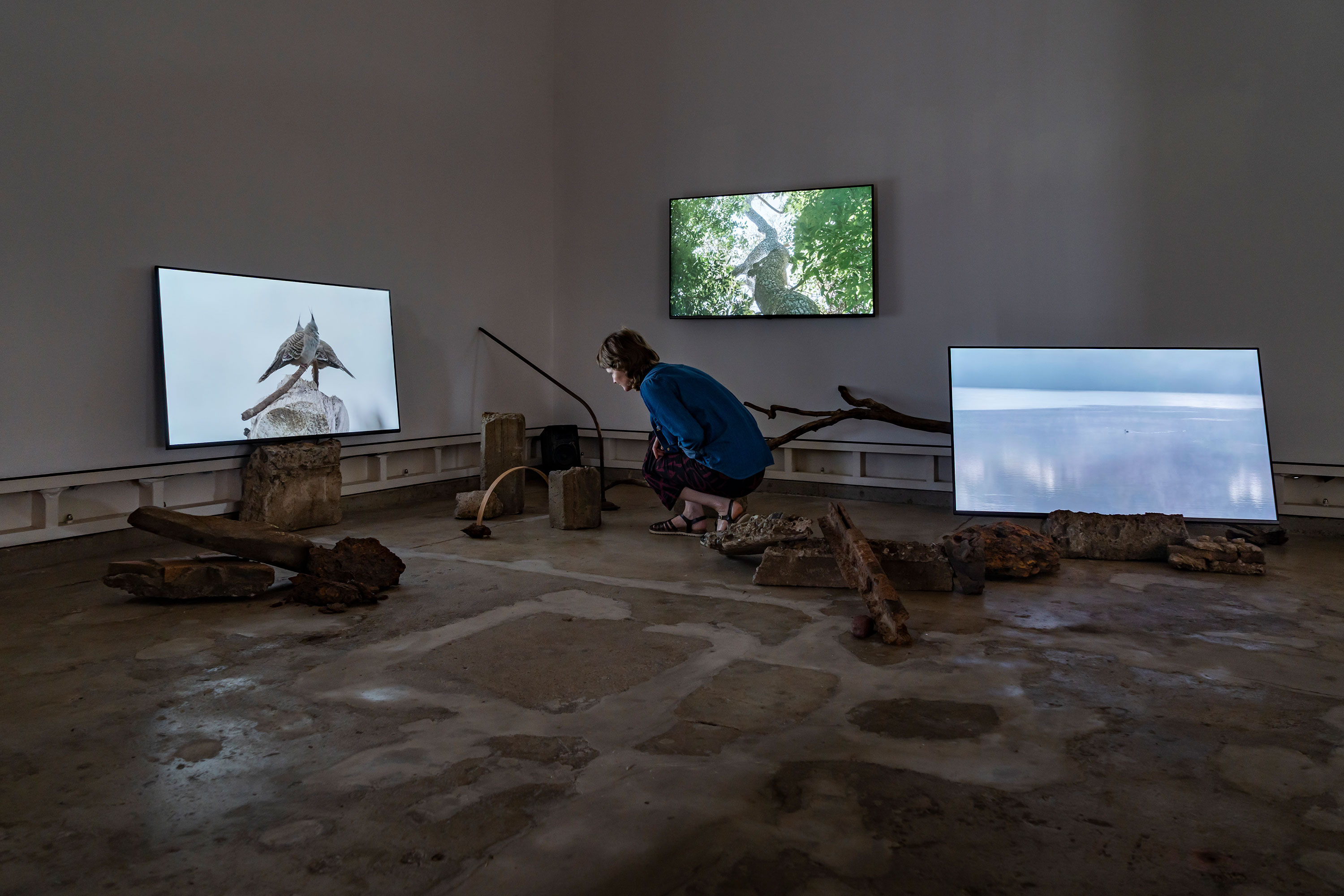
Morning mist obscures river horizons, life in the canopy awakens. A goat grazes, another looks warily through the screen. A dog barks. A warning, a warding. The maremma dog’s gaze is alert. What does she sense at the edges? Do the ground pigeons sense it too, as they ruffle their feathers? Meanwhile, clouds pass and a standing log rots, becoming old forest again.
'ward' documents ecological and hydrological systems across the Somerset region, of a goat farm near Cressbrook Creek, Biarra; the restoration of the creek and gully adjacent to The Condensery; the upper Brisbane River; Wivenhoe Dam; and Greenhide Creek Reserve, a remnant site of lowland rainforest.
As she visited these areas, Caitlin Franzmann observed the delicate interplay of plant, animal and human life and the increasing necessity of interspecies care in these natural systems marked by human intervention and continual change. In her visits, Franzmann spent time with individuals and community groups diligently working towards the restoration and/or protection of rapidly disappearing endemic landscapes. Across the region, she noted species interactions within and across ecosystems – the regular hand removal of weeds creating space for cunjevoi lily growth; the animal protector species, such as the Maremma dog, used by farmers to guard their livestock and goats from introduced predators; and fungi consuming and breaking down felled trees.
An area, a boundary or to guard and protect, ward offers the hope of protection from harm and for collective care for the future